Showing posts with label Philosophy. Show all posts

Sep 6, 2012

Philosophical Phun - Social Privacy

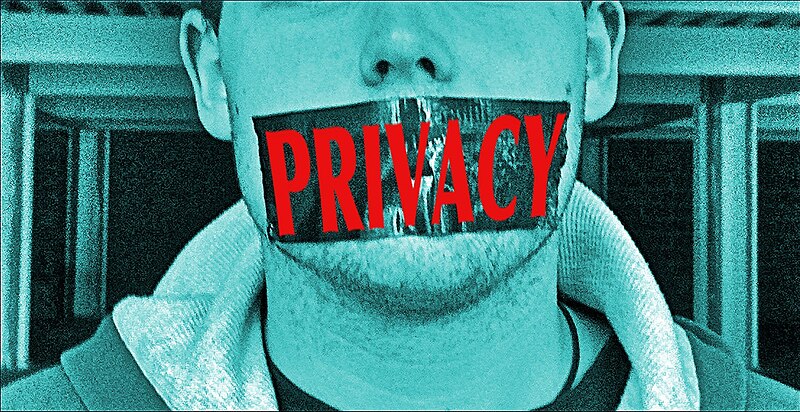
File:Gagged by Privacy.JPGConsider this scenario: A twenty-something male standing outside of the supermarket talking loudly on his cell phone making no attempt to hide his conversation. He is so loud and animated that you can tell he is angry with his significant other. Dollar-to-a-donut that you have experienced something similar and that it is painfully uncomfortable. Why do these situations seem to occur more frequently today?


As with most other topics, philosophers have not always agreed on the scope of privacy. However, most have agreed that privacy is a good or a right (privacy referred to here pertains to personal and social relationships not to the legal and constitutional aspects of privacy). With the exception of Plato and Aristotle (they viewed privacy as a negative concept), philosophers generally have promoted privacy as a necessary component for a prosperous and happy society. In social relationships, privacy allows one to “control who knows what about us and allows us to vary our behavior with different people so that we can maintain and control our various social relationships.”

Although it is a challenge to find a single definition that encompasses all we might care about when it comes to privacy, most people have enough strong intuitions about the subject that they argue in its favor and deem privacy to be a positive moral value. There seems to be something intuitive and urgent about privacy that it invokes a sense of discomfort in us when it is violated. The ability to control which details of our lives should be disclosed is something that people cherish and deem to be significant in forming and maintaining relationships.

Jul 8, 2010

Philosophical Phun - Faith As Trust :o)

The justifiability of belief that God exists is typically the focal issue in the Philosophy of Religion. Yet the theistic traditions always include a foundational claim about an authoritative source, or sources, of revealed truth. Religious theism is not just believing that God exists; it is believing that God exists and is revealed thus and so (in great historical acts, in prophets, in scriptures, in wisdom handed down, etc.). The reasonableness of theism is therefore as much a matter of the reasonableness of an epistemology of revelation as it is of a metaphysics of perfect being. A sticking point is that a loving God would make his existence clear—but this assumption is open to question. Perhaps God provides only, as it were, ‘secret’ evidence of his existence, purposely overturning the expectations of our ‘cognitive idolatry’ in order to transform our egocentric self-reliance ; or perhaps there may be significant constraints logically inherent in the very possibility of unambiguous divine revelation to finite minds.

It may thus be held that faith as accepting propositional truths as divinely revealed rests on believing in God—and it is this ‘believing in’ which is, fundamentally, the nature of faith. What more is there to believing in God beyond believing that God exists, on this non-reductive view?. To believe in God is to make a practical commitment—the kind involved in trusting God, or, trusting in God. (The root meaning of the Greek pistis, ‘faith’, is ‘trust’.) This, then, is a model of faith as trust—but of trust not simply in the sense of an affective state of confidence, but in the sense of an action. The fiducial model is widely identified as Protestant. Swinburne, for example, calls it the ‘Lutheran’ model, and defines it thus: ‘the person of faith does not merely believe that there is a God (and believe certain propositions about him)—he trusts Him and commits himself to Him’.

Trust involves a venture; so too—it is widely agreed—does faith. So, if faith is trust, the venture of faith might be presumed to be the type of venture implicated in trust. When we trust we commit ourselves to another's control, accepting—and, when necessary, co-operating as ‘patient’—with the decisions of the trustee. Venturing in trust is usually assumed to be essentially risky, making oneself vulnerable to adverse outcomes or betrayal. Accordingly, it seems sensible to hold that one should trust only with good reason. But if, as is plausible, good reason to trust requires sufficient evidence of the trustee's trustworthiness, reasonable trust appears both to have its venturesomeness diminished and, at the same time, to become more difficult to achieve than we normally suppose. If adequate evidence of trustworthiness is not required for reasonable trust, how is reasonable trust different from ‘blind’ trust?

Some philosophers have suggested that the challenges faced by accounts of faith as involving belief beyond the evidence may be avoided by construing theistic commitment as hope. They contrast hope with faith (understood as belief), arguing that a religion of hope is both epistemically and religiously superior to a religion of faith. Other philosophers identify faith with hoping that the claims of faith are true. Hope as such is an attitude rather than an active commitment: a model of faith as hope may thus, more strictly, take faith to be acting in, or from, hope.  I think that many cannot fathom the thought of there being nothing beyond our current existence, that there is no redemption from our daily sins.  My hope is that people will start to live their lives like they mean it, not relying on future forgiveness.

Source
Jan 6, 2010

Philosophical Phun - False Beliefs :o)


On the assumption that reasons are facts, we can have no false reasons and we have no reasons for any of our false beliefs. To say that there are no false, justified beliefs at face value is to accept the absurd consequence that none of the false beliefs we hold are held rationally, since they are not capable of any justification whatsoever. Further, since we often cannot tell with any certainty which of our beliefs are true we must be sceptics about most, if not all, of our beliefs. Since we can’t be certain that they’re true, we can’t have any justification for them whatsoever, and further there’s no difference between being rational and being irrational (being epistemically responsible and irresponsible) so long as we’re mistaken.

Rationality is a necessary condition for certain kinds of excuses (including mistaken belief excuses for action), but excuses do not provide justification. Rational/reasonable response to reasons is not the same as the justified response.

Do you find yourself being a sceptic, a rationalist, or a factualist ???  I know that I waiver between being a sceptic and a factualist, but rarely a rationalist.

Head over to Think Tonk for the original entry :o)

Dec 1, 2009

Philosophical Phun - Moral Deliberation :o)

'Which action, of those available to me, would be best?' -- or, in other words, what ought I to do? -- may be considered the basic question of practical moral deliberation. There are of course other questions we may ask -- e.g. 'what sequence of actions, across my remaining lifetime, would be best?' -- but it's important to note that these are different questions.


To begin, note that the standard question 'What ought I to do?' is a question about an individual act. For example, "Should I accept the divine deal or not?" is an important moral question that someone might deliberate over. If they reason correctly, they will reach the conclusion "no, reject it". Morality is action-guiding, and this is the guidance it offers in this case.


Practical reasoning concludes in action (or, to put it more neutrally, let's say implementation) . We can reason about how to act, and then do so. But while we can think about what the best sequence of acts would be, we can't implement this as the conclusion of our reasoning -- at most, we can implement but a part of it. The reasoning instead concludes in mere belief, and so is really theoretical reasoning, albeit about a topic of moral interest.


Morality is supposed to be action-guiding, not action-sequence-guiding. There's a reason for this: we can only implement actions, not whole sequences thereof. 

An individual action is a true, but trivial answer. The fact that it's true explains why 'what should I do?' is the basic question of practical moral deliberation, and why the best-sequence question isn't really 'practical' at all. On the other hand, the fact that it's trivial suggests that, philosophically, we would do better to refocus on the question, 'what can I do?'

For the source of this entry, go to Philosophy, et cetera.

What we commonly do is make moral judgments about individual acts, in the context of a sequence, or against the background of having performed other acts (and omissions).  I think that this is where much of our society breaks down today, there are many that compartmentalize their morality from their actions, not recognizing that their morality should be guiding their actions. 

Nov 4, 2009

Philosophical Phun - Consequentialism :o)

Consequentialism, as its name suggests, is the view that normative properties depend only on consequences. This general approach can be applied at different levels to different normative properties of different kinds of things, but the most prominent example is consequentialism about the moral rightness of acts, which holds that whether an act is morally right depends only on the consequences of that act or of something related to that act, such as the motive behind the act or a general rule requiring acts of the same kind.

One common illustration is called Transplant. Imagine that each of five patients in a hospital will die without an organ transplant. The patient in Room 1 needs a heart, the patient in Room 2 needs a liver, the patient in Room 3 needs a kidney, and so on. The person in Room 6 is in the hospital for routine tests. Luckily (for them, not for him!), his tissue is compatible with the other five patients, and a specialist is available to transplant his organs into the other five. This operation would save their lives, while killing the "donor". There is no other way to save any of the other five patients (Foot 1966, Thomson 1976; compare related cases in Carritt 1947 and McCloskey 1965).

We need to add that the organ recipients will emerge healthy, the source of the organs will remain secret, the doctor won't be caught or punished for cutting up the "donor", and the doctor knows all of this to a high degree of probability (despite the fact that many others will help in the operation). Still, with the right details filled in, it looks as if cutting up the "donor" will maximize utility, since five lives have more utility than one life. If so, then classical utilitarianism implies that it would not be morally wrong for the doctor to perform the transplant and even that it would be morally wrong for the doctor not to perform the transplant. Most people find this result abominable. They take this example to show how bad it can be when utilitarians overlook individual rights, such as the unwilling donor's right to life.

This problem cannot be solved by building rights or fairness or desert into the theory of value. The five do not deserve to die, and they do deserve their lives, just as much as the one does. Each option violates someones right not to be killed and is unfair to someone. So consequentialists need more than just new values if they want to avoid endorsing this transplant.
Another popular charge is that classic utilitarianism demands too much, because it requires us to do acts that are or should be moral options (neither obligatory nor forbidden). (Scheffler 1982) For example, imagine that my old shoes are serviceable but dirty, so I want a new pair of shoes that costs $100. I could wear my old shoes and give the $100 to a charity that will use my money to save someone else's life. It would seem to maximize utility for me to give the $100 to the charity. If it is morally wrong to do anything other than what maximizes utility, then it is morally wrong for me to buy the shoes. But buying the shoes does not seem morally wrong. It might be morally better to give the money to charity, but such contributions seem supererogatory, that is, above and beyond the call of duty. Of course, there are many more cases like this. When I watch television, I always (or almost always) could do more good by helping others, but it does not seem morally wrong to watch television. When I choose to teach philosophy rather than working for CARE or the Peace Corps, my choice probably fails to maximize utility overall. If we were required to maximize utility, then we would have to make very different choices in many areas of our lives. The requirement to maximize utility, thus, strikes many people as too demanding because it interferes with the personal decisions that most of us feel should be left up to the individual.

However, most people begin with the presumption that we morally ought to make the world better when we can. The question then is only whether any moral constraints or moral options need to be added to the basic consequentialist factor in moral reasoning. (Kagan 1989, 1998). If no objection reveals any need for anything beyond consequences, then consequences alone seem to determine what is morally right or wrong, just as consequentialists claim.

For me, it is about personal choice and considerations of others around us. We start with those we love, they come first. Then, we move down to acquaintances, they may or may not be deserving of our benevolence, but again, it is a personal choice. Beyond that, it becomes much more altruistic. To me, the summation comes from Spock in Star Trek: The Wrath of Khan; "The needs of the many outweigh the needs of the few, or the one". It is up to each and every one of us to make these distinctions for ourselves, within our belief systems.