Sep 9, 2012

Change Is Good!

File:Change.jpgA mostly quiet Sunday, after a busy few days and an emotional roller coaster.

Spent the morning on the interwebz getting caught up on stuff, then watched Da Bears!

After that it was out to get a mini-workout in, mow the lawn, and get my Mayorship for Nutwood Outback back from Matt :o)

Then it was a relaxing shower and getting into the mindset for starting the new job tomorrow.  I am beyond excited and am really looking forward to the start of this new chapter.  I am pleased to know that I have some friends that are looking forward to sharing this journey with me.

Sunday Silliness - Synergy :o)

Synergy Demotivator

The Boss & ND Squeaks Out A Win

All in all, it has been a great few days.  Since I am jobless for three days, we headed to the Windy City to be with family and friends and take in the Boss at Wrigley Field.  It was a great show! 

Then we headed back to South Bend this morning and grabbed a bite to eat and headed to ND Stadium for the first home game.  They seemed a bit off their stride, but managed to kick the winning field goal with one second left.  

Tomorrow will be mowing the lawn and just some general chilling.

Hope you had a nice weekend.

Sep 8, 2012

Communication!

Communication is 80%-90% of the time a Project Manager spends their time on. So what are some of the problems that can occur within a project team?


Vertical flow. Communication both up and down stops working. When there’s a vacuum in the information, we know how people will fill it - with their imagination. In the upward direction, workers on a problem project quickly become conditioned not to escalate problems. Consequently, important status stops flowing up and problems go unmanaged.


Horizontal flow. Part of the team is not talking to another, or at least not routinely coordinating as they should. Sometimes it’s because one or two people are on a power trip. Sometimes, their team members don’t get along. Sometimes on matrixed teams, the functional managers are in conflict which manifests itself as dysfunction on the project team.


Skill deficit. Not everyone is born with a gift for communication. Most people can develop it given the chance. Some people might never get good at it. I have seen teams where underdeveloped communication skills simply get in the way.


Morale. If a team is demoralized, it is simply difficult for people to find the energy to go the extra distance and make sure communications are timely, accurate, and relevant. Once people are emotionally checked out, all the soft skills suffer.


Cultural inhibitions. The organization’s culture can impede good communication. Sometimes managers routinely withhold information as a source of power and control (aka “mushroom management”). Aggressive companies typically reward success and punish failure to a fault which encourages dysfunctional competition within a team.

What are some of the tools that can be used to improve communication?


Daily team meetings. This can help not only the vertical flow of information but horizontal. Everyone becomes more attuned to people they need to coordinate with and, even more importantly, why. Target is 10 – 20 minutes.


Coordination meetings. Coordination meetings can simplify communication by giving people direct involvement with what is said and how it is said. It’s our job as project managers to pay attention and end coordination meetings when they are not needed.


Open door policy. Do it, mean it!


Replace the irreplaceable. Sometimes you may need to remove a disruptive team member from the project.


Put culture in the open. Recognizing different assumptions and expectations during a meeting can become routine and even a light diversion.

Whatever you expect of the team, management stakeholders, the sponsor, the vendors, the customers, etc., you must do the same first. You must walk the talk. If you don't, you are a hypocrite. Follow your own advice or you won't get the results you need.


Source

Sep 7, 2012

Humble Pie!

I am humbled by the turnout for my going away gathering tonight.  At one point we consumed more than nine tables at Wheatberry's Restaurant.  They have great food and suds, and we had a great time.  I have to admit I got choked up twice, first when my Director called me up to give me accolades and wished me luck, and second when I had to say my final goodbyes as we left.  I am not ashamed to say that I had tears and sniffles most of the way home. Sigh...

 Leaving the people was the hardest part, but with my wife and best friend by my side, we will enter into our new chapter.  Love you Cook Projects, I may not be physically present, but I will always be there in spirit.

Sep 6, 2012

Philosophical Phun - Social Privacy

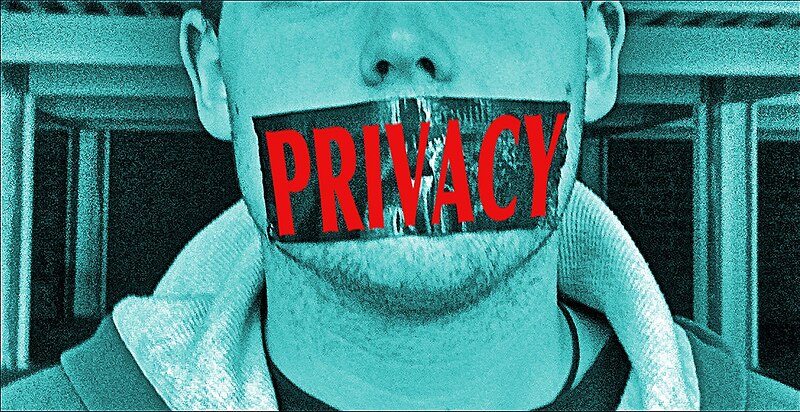
File:Gagged by Privacy.JPGConsider this scenario: A twenty-something male standing outside of the supermarket talking loudly on his cell phone making no attempt to hide his conversation. He is so loud and animated that you can tell he is angry with his significant other. Dollar-to-a-donut that you have experienced something similar and that it is painfully uncomfortable. Why do these situations seem to occur more frequently today?


As with most other topics, philosophers have not always agreed on the scope of privacy. However, most have agreed that privacy is a good or a right (privacy referred to here pertains to personal and social relationships not to the legal and constitutional aspects of privacy). With the exception of Plato and Aristotle (they viewed privacy as a negative concept), philosophers generally have promoted privacy as a necessary component for a prosperous and happy society. In social relationships, privacy allows one to “control who knows what about us and allows us to vary our behavior with different people so that we can maintain and control our various social relationships.”

Although it is a challenge to find a single definition that encompasses all we might care about when it comes to privacy, most people have enough strong intuitions about the subject that they argue in its favor and deem privacy to be a positive moral value. There seems to be something intuitive and urgent about privacy that it invokes a sense of discomfort in us when it is violated. The ability to control which details of our lives should be disclosed is something that people cherish and deem to be significant in forming and maintaining relationships.

Sep 5, 2012

West Coast Chill


Twenty years ago, Mitchell Joseph set out to solve one of the great challenges of the modern age: how to make a can of beer that could cool itself. He designed a can that used and released the coolant HFC-134a. His prototype worked—it cooled liquid dramatically in a matter of minutes—but there was a hitch. HFC-134a is a greenhouse gas 1,400 times as potent as carbon dioxide. Popping one of Joseph’s cans was the environmental equivalent of driving 500 miles, and it was illegal under EPA regulations. Suffice it to say, his original design never made it into production. This year, Joseph introduced the ChillCan, a completely legal self-chilling can that reduces a drink’s temperature by 30ºF in three minutes.

The ChillCan contains a cylindrical chamber of high-pressure CO2 gas, which ends in a valve that extends through the base of the can and is capped by a button. When the user pushes the button, the valve opens and the CO2 rushes out of the bottom of the can and into the air. As the gas expands, it absorbs heat from the surrounding liquid, lowering the temperature.

Along with his can, Joseph is launching an energy drink called West Coast Chill to put in it. The drink will be available this summer in Arizona, Nevada, Southern California and online, and in stores nationally by 2014. Hopefully, beer will be next.


Early pricing is $4 per can, hopefully that will come down as production increases.

Sep 4, 2012

Narcissistic Lament...


This really resonated with me, I have been called narcissistic in the past, and as I read through the characterizations I was amazed at how much that IS NOT ME, but definitely matches someone from a dark period in my life :o).  

My current work role is to be a mentor, and I have been enjoying it tremendously.  

Working with a narcissistic leader can be terrifying and frustrating – with many wondering how someone so incapable of developing employees and goodwill can advance within an organization.
Narcissistic leaders can be characterized by:
A controlling personality: rife with arrogance, self-importance, a strong sense of entitlement, a lack of empathy for others, a pre-occupation with power, a need to feel extremely special and unique, and a desire for excessive admiration from others.
Being thin-skinned: sensitive to perceived disrespect and criticism, suspicious of others, paranoid, abrasive, and dismissive of others.
A preference to keep others at a distance or surround themselves with those only who will agree with them and their vision.
A lack of interest in mentoring others.
Elevating (or exaggerating) their accomplishments while minimizing the accomplishments, contributions, and value of others.
Narcissistic leaders can be good for organizations, though. They pursue goals aggressively, drive toward innovation, are highly competitive, have a strong vision, are charismatic orators, and make bold decisions.
Manage your expectations. If you were hoping to have a closer relationship with the narcissist, let it go.
Frame your messages wisely. Remember that narcissists have difficulty being challenged or criticized. If you really want your idea to be accepted, make the narcissistic leader believe it was his idea all along.
Document carefully. Make sure to clarify in writing who is responsible for what. When things don’t work out as planned, narcissistic leaders will blame others before accepting responsibility.
Set clear boundaries. Narcissistic leaders want what they want when they want it.
Become a cheerleader. Stop hoping in vain that a narcissistic leader will appreciate you, credit your accomplishments or be supportive of you or others. Rather, develop your own sense of a job well done and take every opportunity to celebrate successes — yours and others.
Find fulfillment and successes outside the workplace. Narcissistic leaders can bring morale down, and repeated exposure to their negative behaviors can harm anyone’s self-esteem. Low self-esteem can, in turn, affect relationships and one’s belief in self-destiny. Find successes outside of work to validate yourself by spending time with family, setting personal goals (and achieving them), volunteering, learning something new, mentoring others, building your network outside the workplace or other activities at which you excel.